
.avif)
A service business website can attract visitors without generating inquiries when the audience, message or next step does not match what those visitors need. Before paying for more traffic, check what people expect to find, what your page explains and whether contacting you works.
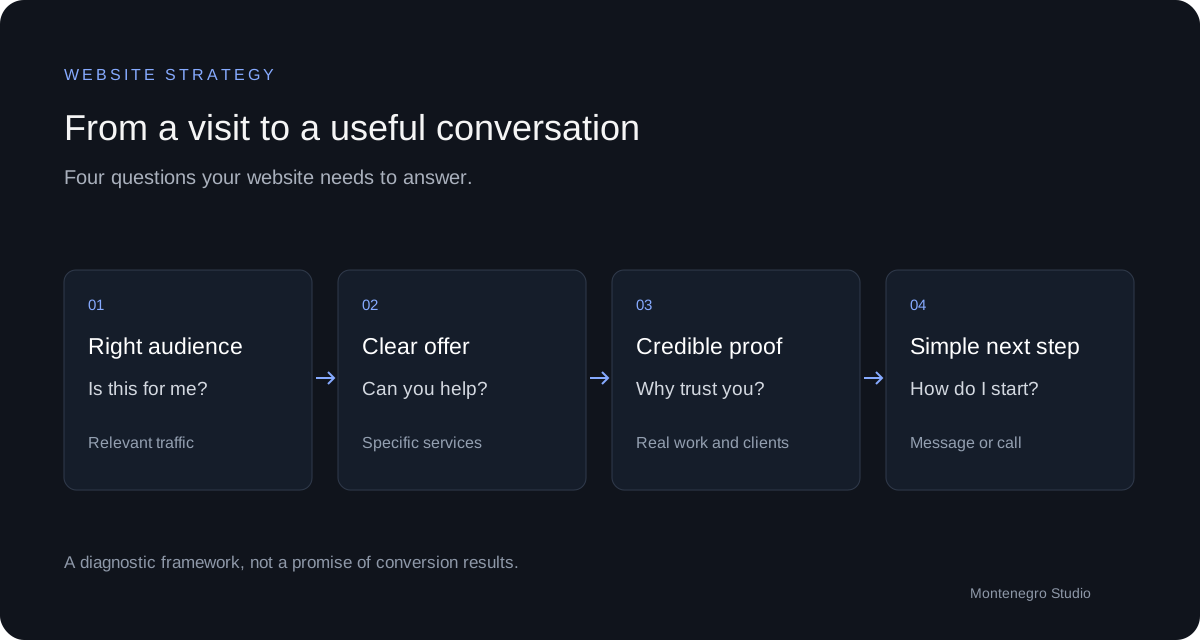
Are the right people reaching your website?
Start with the source of your visits. A visitor researching a general definition is different from someone comparing providers. Look at the pages people enter through and the search queries available in your analytics tools. Separate relevant service traffic from jobs, student research and unrelated queries.
Write down your main service, the customer it serves and the problem that usually triggers an inquiry. Use that description to review your homepage. If it could describe almost any company, make it more specific.
Can a visitor understand your offer quickly?
Your opening headline should explain what you do. The paragraph beneath it should identify who you help and what the work includes. Avoid making the visitor translate terms such as growth systems or digital transformation before they understand your service.
For example, a specialist practice might explain its service, location and appointment process. An agency might explain its Webflow delivery support and how it works with an existing design team. The right copy depends on the business. Specific language gives visitors something concrete to evaluate.
Does the page provide evidence?
Place relevant work and client feedback near the claims they support. A case study should describe the starting problem, the work completed and the result that can be verified. If you do not have reliable revenue or lead data, show the deliverables and explain the decisions. Do not turn an unmeasured outcome into a percentage.
Use testimonials with the client’s permission. A detailed comment about communication or delivery can help answer a real concern, even when it does not mention financial results.
Is the next step easy to complete?
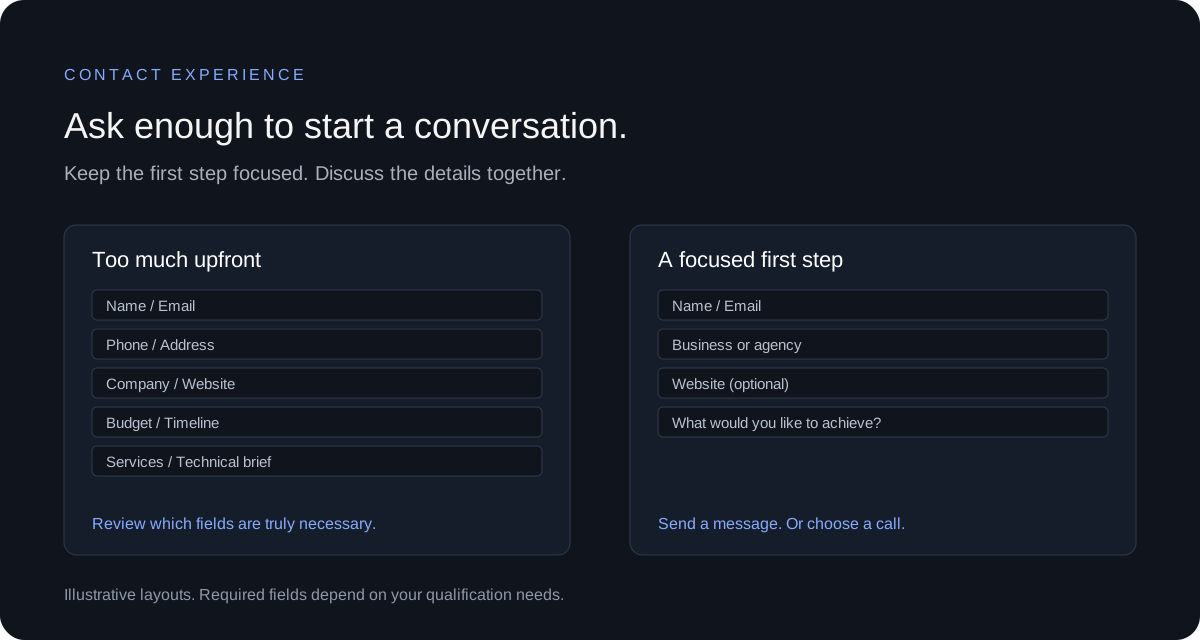
Choose one main action for the page. A contact page can offer a short message form and a call booking option, with clear labels so visitors know they can choose either. Ask for the information you need to start a conversation. Budget and timing can be discussed later when they are not essential to qualifying the initial request.
- Test the form on a phone and a desktop.
- Check that required fields are labelled clearly.
- Confirm that the success message explains what happens next.
- Check that the request reaches the correct inbox.
- Make sure the booking calendar works and has suitable availability.
What should you measure?
Track completed requests and qualified conversations, not only button clicks. A click on a contact button does not prove that the visitor submitted the form. Keep test submissions separate from genuine inquiries. Compare the same traffic sources and allow enough time to see a meaningful pattern before deciding whether a change helped.
Also record what happens after the inquiry. If many people contact you but few are a fit, the issue may be audience targeting, offer clarity or qualification. More form submissions alone do not necessarily mean a better website.
Should you redesign the entire website?
Not automatically. Start with the clearest obstacle. A confusing headline, missing proof or a broken form may be addressed without a full rebuild. Consider a redesign when the navigation, content structure or platform constraints repeatedly prevent the changes your business needs.
A practical starting point
Review one important service page, one contact journey and one traffic source. Write down the strongest problem you find, make a focused improvement and measure completed inquiries. This keeps the work connected to customer decisions.
Talk to Montenegro Studio about your website if you would like help reviewing the path from visit to inquiry.
Turn your website into a growth system
If your website isn’t driving results, let’s find what’s holding it back.
Let's talk